
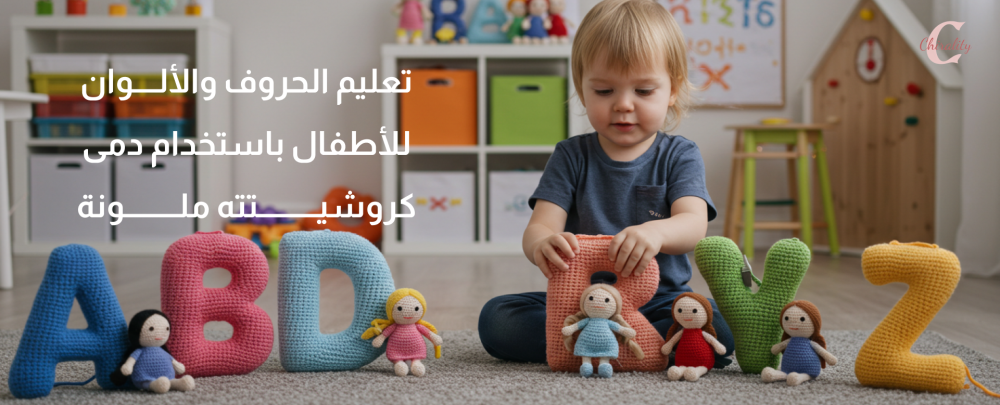
Teaching children letters and colors in early childhood is one of the most important foundations upon which a child's linguistic and cognitive abilities are built. Educational studies indicate that the first three years of a child's life are the golden period for developing language skills and visual perception. During this stage, children tend to learn through play and interaction with colors and shapes, and tangible educational tools such as colorful crocheted dolls help make the learning process an enjoyable experience rich in visual and sensory stimulation.
The importance of teaching letters and colors in children's cognitive development:
Developing language skills:
When a child begins to recognize the letters of the alphabet and their sounds, they build the foundation upon which they will later rely for reading and writing. Research indicates that children who receive early alphabet instruction have a wider vocabulary and a better ability to form words and sentences ( Piasta & Wagner, 2010 ).
Enhancing cognitive abilities:
Teaching colors helps children develop visual discrimination skills and understand the differences between objects, which supports logical thinking and the ability to classify. These skills are essential for developing visual-spatial intelligence, which later translates into mathematical and scientific skills.
Improving social communication:
Interaction between the child and the teacher or parents during learning enhances their ability to communicate and express themselves. Using crocheted dolls as an educational tool encourages the child to participate in dialogue and express their ideas more effectively.
Why are crocheted dolls an effective way to teach children?
Safety and high quality:
Crocheted dolls are made from safe cotton or wool yarn, free from harmful chemicals, making them ideal for children even at very young ages. They also have a soft texture that reduces the risk of injury or scratches during play.
Customizable designs:
Crocheted dolls can be designed in the shape of letters of the alphabet, each letter in a different color and size suitable for a child's hand. Small symbols or drawings can also be added next to each letter to help the child associate the letter with a familiar word (such as the letter B with a drawing of a duck).
Enhance the senses and imagination:
The texture of knitted dolls stimulates the sense of touch, while the variety of colors and shapes helps develop imagination and creativity. ( Gibson et al., 2020 ) Sensory games contribute to improving children's thinking and innovation abilities by up to 40%.
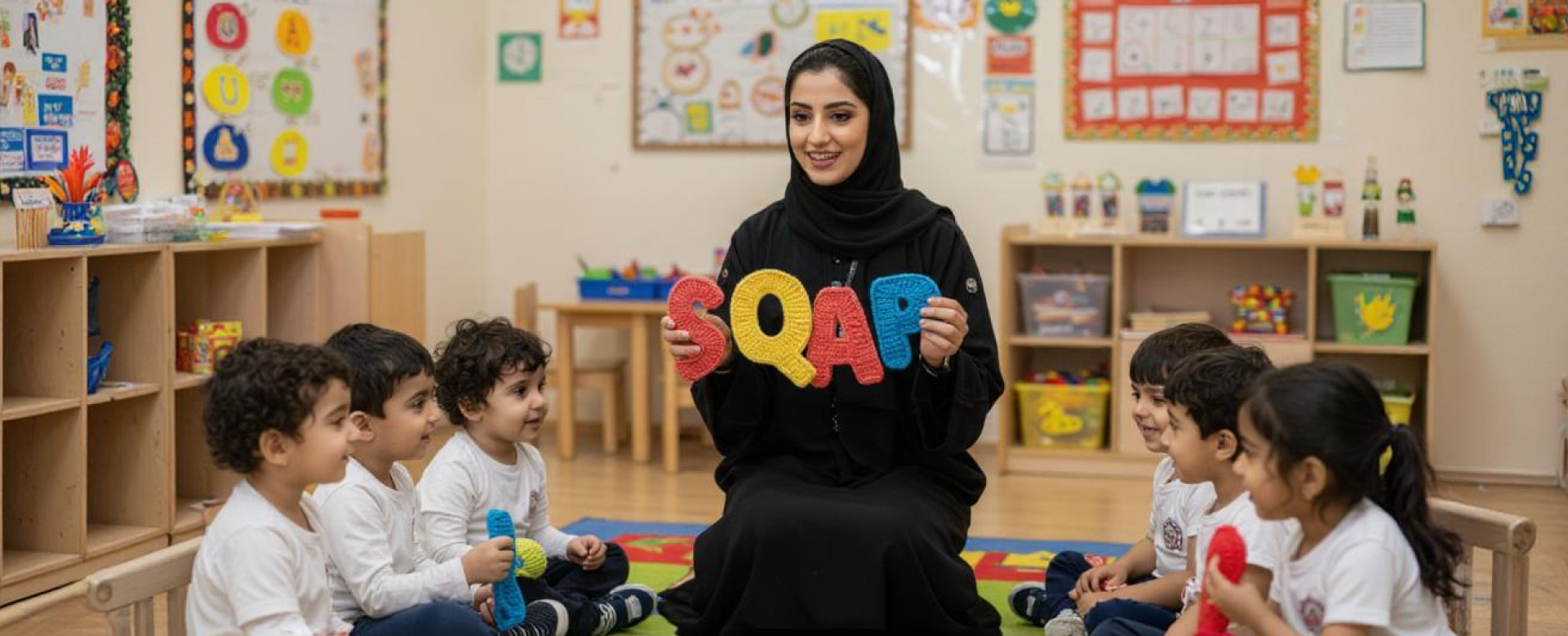
Strategies for teaching letters and colors using crochet dolls:
Learning through play:
Play is one of the most effective ways to develop children's cognitive and linguistic skills. You can use crocheted dolls in fun educational games that stimulate children to think and interact.
- Letter search game: The child is asked to choose the doll that holds the required letter, which helps develop visual letter recognition skills and strengthens memory.
- Alphabet sorting game: The dolls are presented to the child at random, and then he is asked to sort them according to the correct alphabetical sequence, which promotes logical understanding and chronological ordering of letters.
- The Missing Letters Game: One of the letters disappears, and the child is asked to identify the missing doll, which develops observation and attention skills.
Interactive learning with colors:
Colors are essential elements that attract children's attention and facilitate the learning process. Using crocheted dolls in primary (red, blue, yellow) and secondary (green, orange, purple) colors, you can carry out various activities such as:
- Sorting letters by color: The child places each doll of a specific color in one group, which helps him to recognize colors and develop sorting abilities.
- Matching colors to the environment: The child is asked to match the doll's color to real objects from their surroundings (such as blue with the sea or yellow with bananas), which enhances association skills and visual perception.
- Color and letter game: Choose a doll of a certain color and search for a word that begins with its letter, combining learning letters and colors at the same time.
Educational storytelling:
Using stories in education stimulates the imagination and makes the child have an enjoyable learning experience:
- A story for each letter: A doll can be dedicated to each letter and a short story can be woven around it (for example: the letter B loves the duck), which makes it easier for the child to memorize the letters and link them to tangible meanings.
- Puppet theater: Using several puppets in a small theater to act out an educational story about colors or letters, encouraging children to participate and interact.
- Letters in everyday life: Linking letters to words and everyday events familiar to the child enhances understanding and memory.
- Products that help you teach your child. Chirality Handmade store has a special section dedicated to educational toys ( Vegetable Set - Zoo Set ).
Advanced sensory activities:
Sensory education contributes to the development of motor, auditory, and visual perception abilities simultaneously:
- Dolls of different sizes: The child can use dolls of different sizes to link letters with the concepts of big and small, which helps in building spatial and sensory concepts.
- Sound integration: When each doll is touched, the letter is pronounced clearly, linking the three senses (touch, hearing, sight) and promoting deeper letter learning.
- Sensory discrimination games: such as recognizing letters by touch only, without looking at them, which strengthens the sense of touch and sensory memory.
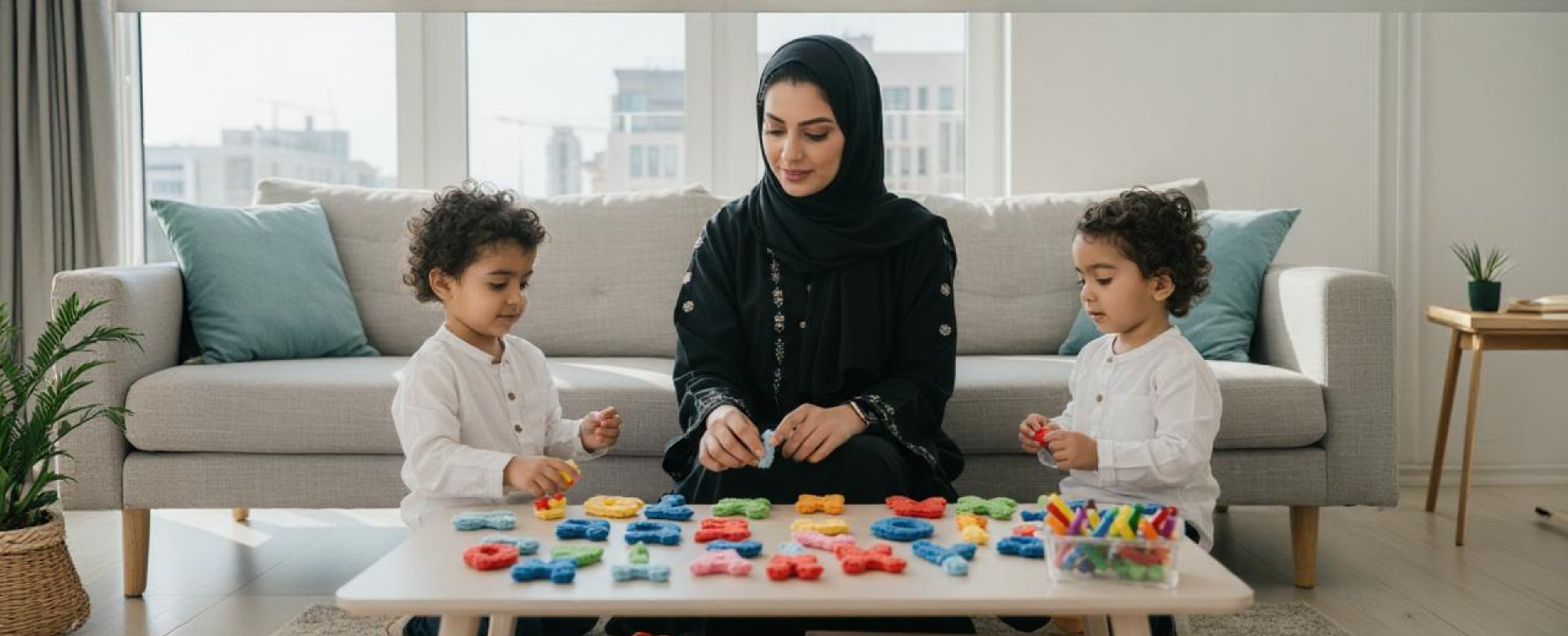
The role of parents and teachers in supporting learning:
Active participation:
Having a parent or teacher present while the child is using crocheted dolls encourages active participation and increases their interest in learning. They can ask questions and encourage the child to answer and choose between dolls.
Repetition and practice:
Repetition in a fun way helps to solidify letters and colors in memory. For example, repeatedly learning the same letter using different colors reinforces letter and color discrimination.
Boosting self-confidence:
When a child is rewarded or encouraged for completing an educational task using puppets, he feels confident and enthusiastic to continue learning, as confirmed by modern educational research ( Neuman & Roskos, 2007 ).
Benefits of using crochet dolls in the educational process:
- To provide a fun and engaging learning experience.
- Developing fine motor skills while holding and manipulating dolls.
- Stimulating imagination and innovation through games and stories.
- Can be used anywhere: at home, in the nursery, or in the classroom.
- Enhancing social interaction between children and their peers during group play.
- Supporting multi-sensory learning (visual, auditory, tactile).
- Teaching children problem-solving skills through interactive educational games.
Summary:
Teaching children letters and colors using colorful crocheted dolls is one of the most creative and effective educational methods in the early years. This approach combines play and learning, relying on sensory and imaginative interaction, making it suitable for children of all levels. With modern teaching strategies and the support of parents and teachers, impressive results can be achieved in developing a child's language skills, visual perception, and social abilities, preparing them for success in later educational stages.