
What tools are used in crochet?
When the artist's hands delve into the world of crochet, life springs forth from its threads. Colors transform into a language of expression, weaving beautiful stories about life, nature, and cultures. Through these handcrafted arts, the artist can tell a story, express their passion, and convey their experiences in an innovative and captivating way.
Crochet is one of the oldest and most beautiful knitting arts, expressing creativity and manual skill. To fully enjoy the crochet experience and develop your skills, you need to know the essential tools. In this article, we'll provide a comprehensive guide to the most important crochet tools for beginners, how to use them effectively, and how to use them effectively.
Crochet tools for beginners
Exploring the world of crochet is like a magical journey to discover creativity and appreciate the beauty of handcrafted work. Just as every journey begins with a single step, yarn and crochet hooks are the key to this enchanting world. For beginners, these tools are the first gateway to understanding this wonderful art. As they immerse themselves in shaping their hooks and tracing the path of their yarn, beginners feel the power of creativity renewed within them.
Here are the most important crochet tools for beginners:
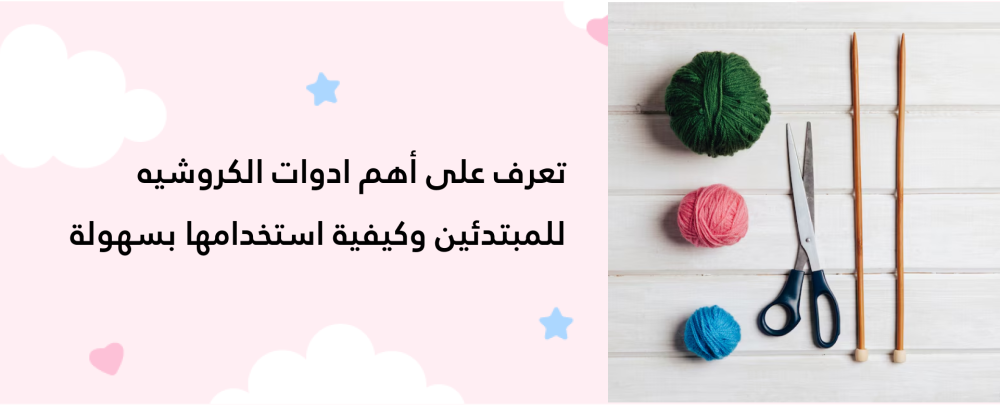
- Crochet yarn: Choose soft, easy-to-use yarns, such as lightweight wool or cotton yarns.
- Crochet needles: Start with a medium-sized needle, such as size G or H, as these are easy to use and suit most patterns.
- Scissors: They can be used to cut threads after the project is finished or to cut excess threads during work.
- Marker pins: help to identify important points in a project and keep work organized.
- Measuring ruler: Helps in measuring samples and ensuring that the required dimensions are achieved.
Steps to success in crochet: How to choose and maintain the right tools to practice your hobby efficiently.
Entering the world of crochet requires careful planning and a precise selection of the right tools that meet your needs and aspirations. These tools can be the key to success in creating beautiful and distinctive handmade pieces.
Here are five essential steps to achieving sustainable success in the world of crochet:
- Understanding your artistic needs : Before choosing your tools, thoroughly understand the type of projects you wish to work on and the techniques you want to employ. Do you want to knit specific-sized covers? Or do you prefer working on smaller projects such as flowers and motifs?
- Choosing the right tools : Rely on your knowledge of projects and techniques to determine the appropriate tools. Select rods of a suitable size for the type of yarn you are working with and the project you are undertaking. You can also choose the appropriate needle for embroidery and finishing.
- Tool quality : Always try to choose high-quality tools that ensure comfort and precision while working. Make sure of the quality of the rods and threads you choose to achieve outstanding results.
- Tool maintenance : Keeping tools clean and in good working order is essential to ensure their continued quality and performance. Clean the bars regularly and store them in a dry, secure location. Avoid leaving the bars hanging for extended periods.
- Experimentation and Continuous Learning : Enjoy trying different crochet tools and techniques to develop your skills and deepen your understanding of this wonderful art. Always be prepared to develop and improve your tools and skills through continuous practice and ongoing learning.
By following these steps, you will be able to efficiently select and maintain the right tools, making it easier for you to achieve success and creativity on your crochet journey.
The importance of learning crochet as part of cultural and family heritage:
Learning crochet is not just a skill to be learned and forgotten; it's part of a cultural and family heritage, carrying with it values and traditions passed down through generations. Crochet is one of the traditional handicrafts known for its beauty and diversity, and it has been inherited from generation to generation in many cultures and communities around the world.
Learning crochet is more than just learning a knitting skill. It's a process of intergenerational connection, where knowledge and experience are passed down from grandparents to grandchildren. Through learning crochet techniques, family and cultural bonds are strengthened, as family members come together to share stories, experiences, and skills.
In addition, learning and practicing crochet offers an opportunity for artistic expression and creativity. It allows individuals to design and create unique pieces of art that reflect their personal taste and cultural heritage. With the advancement of technology and the spread of urban life, crochet is one way to maintain a connection with family and cultural traditions and values.
Optional tools to enhance the experience:
- Crochet books for beginners: They provide valuable guidance and advice for learning the basics and developing skills.
- A box for storing supplies: makes it easier to organize and access tools and threads while working.
- Gloves or a needle holder: help prevent strain and fatigue during long periods of crocheting.
- Needle clips: Used to hold needles in place when leaving work for a period of time.
- Comfortable chair: Provides support for your back and makes the crocheting experience more comfortable and enjoyable.
New technologies and equipment that help in developing the knitting process:
- Technologically advanced rails : Smart rails have been developed that come with features such as smartphone app connectivity to provide different knitting patterns, track project progress, and guide users through the work.
- Computerized knitting machines : These machines allow users to create complex and intricate patterns faster and more accurately. They also allow for the creation of large-scale pieces more easily and efficiently.
- 3D printers for knitting : 3D printers allow the creation of three-dimensional structures from yarns and fibers, opening up new horizons for creativity and design in the world of knitting.
- Smart applications and software : Smart applications and software provide features such as pattern graphs, step-by-step guidance for beginners, and performance analytics for professionals, helping to improve performance and save time and effort.
- New fibers and yarns : New fibers and yarns are being developed that offer greater comfort and high performance, such as antibacterial yarns with cooling and heating technologies.
Thanks to these new technologies and devices, beginners and professionals alike can explore and develop their knitting skills in innovative and exciting ways. It's a revolution in the world of knitting, opening up new horizons for creativity and design, and making knitting easier and more exciting than ever before.
conclusion
The basic tools for crocheting for beginners aren't many, but they are essential for getting started with this craft. Choosing the right tools can make the learning process more enjoyable and successful. Don't forget to savor every moment and experiment with new patterns to develop your crocheting skills.
For more from our article: Learn about the best types of crochet yarn used